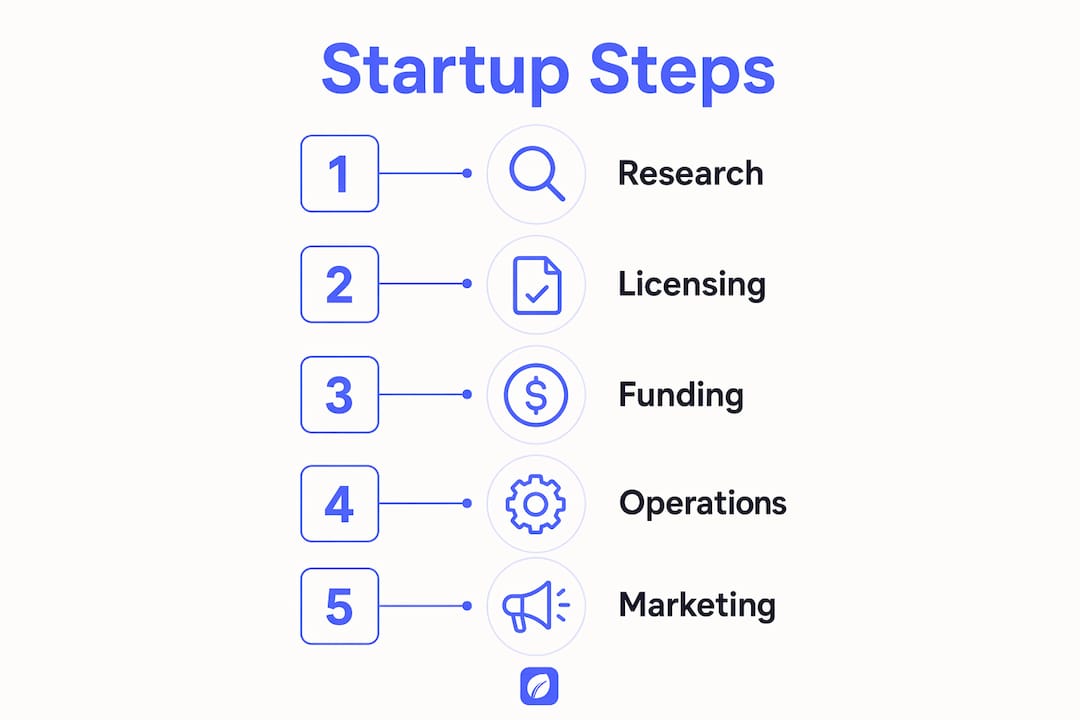
A solid waste disposal business plan is a detailed roadmap covering every critical element of launching and running a waste management company, from your first truck purchase to your first commercial contract. Get it right, and it does three things at once: it keeps you legally compliant, it gives investors something concrete to evaluate, and it forces you to stress-test your numbers before you spend a dollar. The core components every plan needs are:
- Executive summary covering your business concept, services, and financial highlights
- Market analysis identifying your target customers and competitive gaps
- Legal and permit requirements specific to your state and waste type
- Startup capital and financial projections including equipment, insurance, and tipping fees
- Operations plan covering equipment, staffing, and route structure
- Marketing strategy for customer acquisition and contract retention
- Risk management and contingency planning to protect margins when costs spike
This guide walks through each component in order, with real cost figures, regulatory specifics, and a sample template you can adapt for your own waste collection service plan.
1. How to write a compelling executive summary for your waste disposal plan
The executive summary is the first thing any lender or investor reads, and it does the heavy lifting before they ever reach your financials. Keep it to one or two pages, but make every sentence count.
Your executive summary should answer four questions directly:
- What does your company do? Name your waste niche (residential junk removal, commercial dumpster rental, construction debris hauling, or specialized recycling) and your primary service area.
- Who is your customer? Identify whether you are targeting homeowners, property managers, general contractors, or industrial facilities.
- What is the market opportunity? Reference local demand drivers: population density, construction activity, or gaps in existing service coverage.
- What are your key financial targets? State your projected first-year revenue, your break-even timeline, and how much startup capital you need.
A business overview sits just below the executive summary and adds operational context. Specify your legal structure (LLC, S-corp, or sole proprietorship), your registered state, and the exact waste streams you will handle. The SBA's business plan guide recommends being specific about your value proposition rather than describing generic "waste services."
Pro Tip: Write the executive summary last. Once you have completed every other section, you will know exactly which numbers and claims deserve the top billing.
2. How to conduct market analysis for a waste management business
Market analysis is where most first-time founders rush and later regret it. A weak analysis means you price wrong, target the wrong customers, and miss the competitors who already own your best accounts.
The four primary market segments in US waste disposal:
- Residential: Single-family and multifamily homes needing regular collection or one-time junk removal
- Commercial: Restaurants, retailers, and office buildings requiring dumpster service and scheduled pickups
- Industrial and construction: Job sites generating large volumes of debris, often with tight turnaround requirements
- Specialized streams: Electronics recycling (e-waste), medical waste, hazardous materials, and composting programs
For competitive research, the SBA's market research guide recommends mapping existing providers by service type, pricing, and coverage area. Look for underserved niches: a suburb with no dedicated construction debris hauler, or a commercial district where the dominant provider has poor reviews for reliability.
Waste management profit margins for well-run operations range between 10% and 25%, with niche services like recycling and composting often reaching the higher end. Recycling and composting programs tend to outperform standard landfill disposal on margin, partly because they attract commercial clients willing to pay a premium for documented sustainability compliance.

Competitor service comparison:
| Service type | Typical customer | Contract length | Margin profile |
|---|---|---|---|
| Residential collection | Homeowners, HOAs | Month-to-month | Lower (competitive pricing) |
| Commercial dumpster rental | Restaurants, retail | 1–3 year contracts | Moderate to high |
| Construction debris hauling | Contractors, developers | Per-project | Variable, often high |
| Specialized recycling/e-waste | Businesses, municipalities | Annual contracts | High (niche expertise) |
Building defensibility through consistent commercial contracts rather than competing solely on residential municipal bids is a pattern industry experts consistently point to in successful operations. Residential volume is easier to acquire but harder to protect; a commercial contract with a restaurant group or property management company locks in predictable monthly revenue.
3. What legal permits and licenses does a waste disposal business need?
Regulatory compliance is the single area where a missed step can shut you down before you collect your first load. The requirements vary by state, but the federal floor is consistent.
Core requirements for every US waste disposal startup:
- Business license: Register your entity with your state and obtain a local business license. The SBA's business registration guide covers entity formation options including LLC and corporation structures.
- Employer Identification Number (EIN): Required for hiring employees and opening a business bank account. Apply directly through the IRS EIN portal.
- Solid waste hauler permit: Most states require a specific permit to transport solid waste. Requirements differ significantly; check with your state environmental agency.
- Commercial auto insurance: Mandatory for any vehicle used in commercial waste transport, with minimum coverage thresholds set by state law.
- Commercial Driver's License (CDL): Drivers operating vehicles over 26,001 pounds gross vehicle weight need a CDL. Most garbage trucks qualify.
- Environmental permits: Required when handling hazardous materials, medical waste, or operating a transfer station or processing facility.
Handling hazardous waste requires EPA transporter authorization and the use of manifests to track materials from origin to disposal. Many new operators deliberately exclude hazardous materials from their service scope and refer those customers to licensed specialty firms. That is a legitimate business decision, not a limitation.
The EPA's hazardous waste permit requirements detail exactly what triggers federal permitting obligations. State-level requirements often go further; California's Department of Toxic Substances Control, for example, maintains its own transporter registration program with requirements that exceed federal minimums.
Pro Tip: Permit applications for waste transporter licenses and environmental clearances can take several weeks to several months. Build that lead time into your launch schedule so you are not sitting on a truck you cannot legally operate.
4. How to plan startup capital, funding, and financial projections

The financial section of your waste collection service plan needs to do two things: convince a lender you understand your costs, and prove to yourself that the numbers work before you commit.
Major startup expense categories:
- Vehicles: A single used garbage truck can cost tens of thousands of dollars, while new trucks and specialty vehicles command higher prices.
- Dumpsters and containers: A commercial rental operation typically invests in a fleet of dumpsters or containers, which represents a significant capital expense at launch.
- Insurance: Insurance costs such as commercial auto, general liability, and workers' compensation represent ongoing monthly expenses for a small fleet.
- Permits and licensing fees: Vary widely by state; budget $1,000–$5,000 for initial applications.
- Staffing: Drivers, loaders, and a dispatcher for the first 90 days before revenue stabilizes.
- Technology: Route management software, billing systems, and a basic website.
Startup costs for waste businesses typically range from $30,000 to $500,000, with a solo junk removal operator with one truck near the low end and a company launching with three roll-off trucks and a dumpster inventory near the high end.
Estimated initial investment breakdown:
| Expense category | Low estimate | High estimate |
|---|---|---|
| Truck(s) | — | — |
| Dumpsters/containers | — | — |
| Insurance (first year) | — | — |
| Permits and licenses | $1,000 | $5,000 |
| Technology and software | — | — |
| Working capital reserve | — | — |
Funding sources to consider:
- SBA 7(a) loans for small business startup costs
- Equipment financing, where the truck itself serves as collateral
- USDA Rural Development loans if you are operating in rural areas
- Personal savings or family investment for the initial equity layer
Tipping fees vary regionally from $30 to over $100 per ton. That range is wide enough to swing your unit economics entirely, so get the actual fee schedule from every landfill and recycling center in your service area before you set your prices. Your pricing needs to cover tipping fees, fuel, labor, insurance, and vehicle depreciation, then leave a margin on top.
Break-even analysis is straightforward: divide your total fixed monthly costs by your gross margin per load. If your fixed costs run $15,000 per month and you net $150 per load after variable costs, you need 100 loads per month to break even. Track cash flow weekly in the early months, because revenue from new commercial accounts often lags 30–60 days behind service delivery.
5. How to build an operations plan for a waste disposal company
Operations is where your plan meets the road, literally. A well-structured operations section tells investors you have thought through execution, not just concept.
Equipment you will need at launch:
- Garbage trucks or junk removal vehicles sized to your service type
- Roll-off containers or dumpsters for commercial rental customers
- Personal protective equipment (PPE) for all crew members
- GPS and route management devices for each vehicle
- Scales or weight tracking tools if you bill by tonnage
Staff roles and hiring priorities:
- CDL drivers: Your first hire. Without licensed drivers, nothing moves.
- Loaders/laborers: For junk removal and manual collection routes.
- Dispatcher: Manages scheduling, customer calls, and route adjustments in real time.
- Office/admin: Handles billing, permit renewals, and customer accounts.
Route density is one of the clearest profit drivers in this industry. Packing more stops per mile reduces fuel cost per load and increases the number of jobs a single truck can complete in a day. Start with a concentrated service area, build density there, then expand outward. Spreading too thin too early is one of the most common operational mistakes new operators make.
Waste disposal businesses must establish accounts with permitted landfills and recycling centers before launch, and fully understand local disposal rules. An illegal dump, even an accidental one, carries fines that can exceed the revenue from an entire week of service.
Scheduling matters more than most founders expect. Residential customers want the same pickup day every week. Commercial customers want reliability above all else. Build your schedule around those expectations from day one, and use workflow automation tools to handle billing and dispatch as volume grows.
6. What marketing strategies work best for waste disposal businesses?
Waste disposal is not a glamorous category, which is exactly why good marketing stands out. Most operators compete on price alone; the ones who build durable businesses compete on reliability, sustainability, and relationships.
Customer acquisition by segment:
- Residential: Google Business Profile, Nextdoor ads, and yard signs in target neighborhoods. Word of mouth travels fast when you show up on time and leave the curb clean.
- Commercial: Direct outreach to property managers, restaurant groups, and general contractors. A single property management company can represent dozens of accounts.
- Construction: Relationships with general contractors and project managers. Show up at local AGC (Associated General Contractors) chapter events and get on approved vendor lists.
- Specialized: Partner with municipalities or corporate sustainability programs that need documented recycling and composting compliance.
Sustainability practices like recycling and composting improve competitive positioning and often yield higher profit margins than standard disposal. Sustainability is no longer a differentiator in the marketing sense; it is a baseline expectation for commercial clients, and your plan should articulate exactly how you handle recycling and composting streams.
Retention tactics that actually work:
- Lock in commercial accounts with annual or multi-year service agreements
- Offer tiered pricing (basic, standard, premium) to match different service frequencies
- Send quarterly service reviews to commercial clients showing tonnage diverted from landfill
- Build referral incentives for residential customers who bring in neighbors
Pricing strategy ties directly to retention. If you price too low to win the account, you will resent the customer by month three. Price to cover your real costs, including tipping fees that can shift seasonally, and build in a modest annual escalator clause in every commercial contract.
7. Sample waste disposal business plan template and resources
A template gives you structure without locking you into someone else's assumptions. Use this as a starting framework, then customize every section to your specific market, service type, and state requirements.
Sample waste disposal business plan outline:
- Executive Summary (1–2 pages): Business concept, services, target market, funding request, and first-year financial highlights
- Company Overview: Legal structure, ownership, location, mission statement, and waste streams served
- Market Analysis: Target segments, service area demographics, competitor mapping, and identified gaps
- Legal and Regulatory Compliance: List of required permits, licenses, and insurance by state; timeline for obtaining each
- Operations Plan: Equipment inventory, staffing plan, route structure, disposal facility accounts, and safety protocols
- Marketing and Sales Plan: Customer acquisition channels, pricing model, contract strategy, and retention programs
- Financial Plan: Startup cost breakdown, funding sources, 3-year revenue projections, break-even analysis, and cash flow forecast
- Risk Management: Key risks, probability assessment, and mitigation strategies
- Appendices: Permit applications, equipment quotes, letters of intent from early customers, and owner resumes
Useful resources for building your plan:
- SBA.gov for business plan structure and SBA loan programs
- EPA.gov for national waste generation data to support your market analysis
- Your state environmental agency for solid waste hauler permit applications
- The SBA's startup cost calculator for building your financial model
Pro Tip: Customize your plan for your specific state. A waste hauler in Texas faces different permit requirements than one in California or New York. Generic templates miss those details, and lenders notice.
8. Risk management and contingency planning
Every waste disposal business faces a predictable set of risks. The ones that sink new operators are rarely surprises; they are known risks that were not planned for.
The most common risks and how to address them:
- Equipment failure: A truck breakdown stops revenue immediately. Maintain a maintenance reserve fund and establish a relationship with a commercial truck repair shop before you need one. Some operators budget a per-mile maintenance accrual from day one.
- Tipping fee increases: Landfill fees can rise with little notice. Build a fuel and tipping fee escalator clause into commercial contracts so cost increases pass through rather than compress your margin.
- Regulatory changes: Environmental regulations tighten over time. Subscribe to your state environmental agency's update list and budget for compliance costs in your annual plan.
- Driver turnover: CDL drivers are in short supply in most markets. Pay competitively, offer consistent schedules, and document your routes so a new driver can be productive within a week.
- Seasonal demand swings: Residential volume drops in winter in cold climates. Build your commercial contract base to cover fixed costs year-round, so seasonal residential dips do not threaten cash flow.
- Liability and accidents: A vehicle accident involving a loaded garbage truck is a serious liability event. Carry adequate commercial auto coverage and require all drivers to complete a documented safety training program before their first route.
Contingency planning means writing down what you will do when each risk materializes, not just acknowledging that it might. For equipment failure, that means a specific rental vendor you have already called. For a key driver leaving, that means a trained backup or a temp agency with CDL drivers on file. Plans that identify risks without specifying responses are not contingency plans; they are worry lists.
Key Takeaways
A waste disposal business plan built on real cost data, specific permit requirements, and dense route planning gives you the best foundation for a profitable operation.
| Point | Details |
|---|---|
| Startup costs vary widely | Budget $30,000 to $500,000 depending on fleet size, service type, and state. |
| Permits take time | Waste transporter licenses and environmental clearances can take weeks to months; start applications early. |
| Route density drives profit | Concentrate stops in a tight service area before expanding to maximize margin per mile. |
| Tipping fees are variable | Regional landfill fees range from $30 to over $100 per ton; get local rates before setting prices. |
| Commercial contracts build stability | Annual commercial agreements protect revenue better than competing for residential municipal bids. |
FAQ
Is waste disposal a profitable business?
Well-run waste management operations generate profit margins of 10%–25%, with niche services like recycling and composting often reaching the higher end. Profitability depends heavily on route density, tipping fee management, and securing recurring commercial contracts.
What are the 5 R's of waste disposal?
The 5 R's are Refuse, Reduce, Reuse, Recycle, and Recover. They represent a hierarchy of waste management priorities, with prevention at the top and energy recovery from residual waste at the bottom.
How do I start a waste disposal company?
Register your business entity, obtain your state solid waste hauler permit and CDLs for drivers, secure commercial auto and liability insurance, establish accounts with permitted landfills and recycling centers, and launch with a concentrated service area to build route density before expanding.
What is the best recycling business to start?
E-waste recycling and commercial composting programs tend to offer the strongest margins for new entrants, because both serve commercial clients willing to pay for documented compliance and diversion reporting. Both also require less direct competition with established municipal collection contracts.