
A technical specification is a single source of truth that defines what to build, how to verify it works, and what is deliberately left out. Every good one contains front matter, functional requirements, acceptance criteria, and an API contract at minimum. Below is a full worked example you can copy, a portable Markdown skeleton, and the acceptance-criteria patterns that make a spec testable instead of aspirational.
TL;DR:
- Technical specifications should include clear scope boundaries and explicitly list non-goals to prevent scope creep and rework.
- All functional requirements must be testable, assigned unique IDs, and linked to specific acceptance criteria for effective validation.
- Specs should be maintained as living documents, updated throughout development to account for new insights, edge cases, and requirement changes.
- Using structured formats like Markdown with predefined sections helps ensure completeness and traceability from requirements to implementation.
- Pre-validating ideas with model-driven, connected spec tools reduces friction and aligns market research, scope, and requirements before starting development.
Table of Contents
- What Is a Technical Specification, and Who Actually Reads One?
- What to Do Before You Write the Spec
- The Core Components Every Spec Needs
- A Full Example: Login Rate-Limiting Feature Spec
- Making Acceptance Criteria Testable, Not Just Readable
- A Portable Spec Skeleton You Can Copy Today
- Context & Goal
- Non-Goals
- Functional Requirements (FR-1, FR-2...)
- Non-Functional Requirements
- API Contract
- Acceptance Criteria (Given/When/Then)
- Edge Cases
- Test Plan
- Keeping the Spec Alive After the Kickoff Meeting
- How Structured Inputs Turn Into Build-Ready Specs
- Where Most Specs Actually Fall Apart
- Generate a Build-Ready Spec Before You Write a Line of Code
- Sources
- FAQ
What Is a Technical Specification, and Who Actually Reads One?
A technical specification is the document that bridges what a product should do and how engineers build it. It translates a business idea into requirements precise enough that a developer, a QA lead, and a stakeholder six months from now can all read the same page and agree on what "done" means. The best ones read like a contract, not a pitch deck: detailed requirements, design, and functionality laid out so nobody has to guess.
Three groups rely on it daily. Engineers use it to scope and estimate work. QA uses it to write test cases without chasing down the original requester. Product and leadership use it to confirm the build still matches the original intent as weeks pass and priorities shift.
The payoff for getting this right shows up in fewer surprises later:
- Clarity: everyone works from the same definition of the feature, not a Slack thread's worth of assumptions.
- Testability: requirements written as observable behavior, not vague intentions, so QA can verify them directly.
- Reduced rework: ambiguity caught on paper costs a comment; ambiguity caught in code review costs a sprint.
What to Do Before You Write the Spec
Skipping discovery is the single fastest way to produce a beautifully formatted document nobody needed. Kickoff work isn't a formality. Teams that run alignment sessions and validate the problem before drafting a spec waste far less engineering time on features that miss the mark, according to product specification research from LogRocket.
Three things need to happen before you open a blank document:
- Align stakeholders and decision owners. Get product, engineering, and whoever owns the budget in one conversation, and name who has final say when opinions diverge.
- Validate the problem with real evidence. A support-ticket count, a churn signal, or even a rough prototype beats a hunch every time.
- Draw the scope boundary early. Decide what's explicitly out before you write a single functional requirement. It's far easier to expand scope later than to walk it back after engineering has already started.
Pro Tip: Write your non-goals list before your goals list. Naming what you won't build forces a sharper, shorter definition of what you will.
The Core Components Every Spec Needs
A complete spec follows a predictable shape. Miss one of these pieces and you'll find yourself fielding the same question in three different Slack channels a week into the build.
Front matter and metadata. Title, author, status (draft, in review, approved, shipped), creation date, and a version number. A lightweight YAML block at the top, listing fields like id, created, status, and owner, makes the document machine-readable for CI and automation tooling later, not just human-readable now.
Context and success criteria. Why does this spec exist? What's the measurable outcome, tied to a real number, like support tickets deflected or minutes saved per user session, rather than a vague "improve experience" statement? Learn more about DFSS and the product development process.
Functional requirements (FRs). Each one gets an ID (FR-1, FR-2), a priority, and language specific enough to test. "The system shall lock the account after five failed logins" is testable. "The system should be secure" is not.
Non-functional requirements (NFRs). Performance thresholds, security constraints, uptime targets, and data-retention rules. These get skipped constantly and cause the most expensive late-stage rework.
Architecture and API contracts. Endpoints, request and response formats, error codes, and data models.
Out-of-scope, dependencies, and rollout plan. What you're not building, what this feature depends on, and how you'll monitor it after launch.
| Section | Answers | Owner |
|---|---|---|
| Front matter | Who wrote it, when, what status | Author |
| Context & goals | Why this matters, how success is measured | Product |
| Functional requirements | What the system must do | Product + Engineering |
| Non-functional requirements | How well it must do it | Engineering |
| API contract | How systems talk to each other | Engineering |
| Acceptance criteria | How we know it's done | QA + Product |
A Full Example: Login Rate-Limiting Feature Spec
Here's a shortened but production-realistic spec for a common feature: rate-limiting failed login attempts. Adapt the structure, not the specifics.

Title: Login Rate Limiting v1 Status: Approved Owner: Auth Team Goal: Prevent brute-force login attempts without locking out legitimate users who mistype a password. Non-goals: This spec does not cover CAPTCHA integration or multi-factor authentication, both tracked separately.
Context: Support logged 340 account-lockout tickets last quarter, most traced to credential-stuffing attempts rather than genuine forgotten passwords. The goal is to cut that ticket volume by half within one release cycle.
Functional requirements:
- FR-1: The system shall lock an account for 15 minutes after five consecutive failed login attempts within a 10-minute window.
- FR-2: The system shall send an email notification to the account owner when a lockout triggers.
- FR-3: The system shall log every failed attempt with timestamp, IP address, and user agent for audit review.
Acceptance criteria:
Given a user has failed to log in four times in the last 10 minutes, when they submit a fifth incorrect password, then the account locks for 15 minutes and an email notification sends within 60 seconds.
Given an account is locked, when the user submits correct credentials during the lockout window, then the system rejects the attempt and displays the remaining lockout time.
Given an account was locked and 15 minutes have passed, when the user submits correct credentials, then the system logs them in normally and resets the failed-attempt counter.
API contract (simplified):
POST /auth/login returns 423 Locked with a retry_after field (seconds) when the account is in lockout, instead of the standard 401 Unauthorized.
Edge cases: simultaneous login attempts from two devices, password reset requests during an active lockout, and clock skew between servers affecting the 10-minute window.
Deliverables: updated /auth/login endpoint, email template, audit log schema change, and a QA regression suite covering all three acceptance criteria above.
Making Acceptance Criteria Testable, Not Just Readable
Given/When/Then isn't a formatting preference. It's what turns a requirement into something QA and CI can actually run against, and it's why structured spec templates recommend the pattern for anything meant to ship. Write one for the happy path, one for a boundary condition, and one for an invariant that should never break, no matter what else changes.
A few habits separate specs that hold up from ones that generate endless clarification threads:
- Write the boundary case before the happy path. It usually reveals a requirement you hadn't specified yet.
- Tag each acceptance criterion with the FR ID it verifies, so a failing test points straight back to the requirement it validates.
- Rank ACs by risk, not by the order you thought of them. Payment and auth flows go first.
- Keep one AC per behavior. A criterion that tests three things at once is nearly impossible to debug when it fails.
Traceability between an FR and its test case is what makes a spec checkable months after launch, when nobody remembers the original Slack conversation that prompted the feature.
A Portable Spec Skeleton You Can Copy Today
You don't need special software to start. A Markdown file in your repo, versioned alongside the code it describes, works fine for most teams:
# Feature Name
Status: Draft | In Review | Approved
Owner: [name]
Version: 1.0

## Context & Goal
## Non-Goals
## Functional Requirements (FR-1, FR-2...)
## Non-Functional Requirements
## API Contract
## Acceptance Criteria (Given/When/Then)
## Edge Cases
## Test Plan
Before a spec ships to engineering, run it through a short sign-off pass:
| Check | Question |
|---|---|
| Scope | Are non-goals explicit, not implied? |
| Testability | Does every FR map to at least one AC? |
| Ownership | Is a single decision owner named? |
| API contract | Are error states documented, not just the happy path? |
Curated example collections, including the Reforge technical spec library, are worth bookmarking the first few times you write one from scratch. After that, your own past specs become the better template.
Keeping the Spec Alive After the Kickoff Meeting
A spec that gets approved once and never touched again stops being useful the moment the first edge case surfaces in code review. Treat it as a living document that evolves with what engineering actually discovers while building.
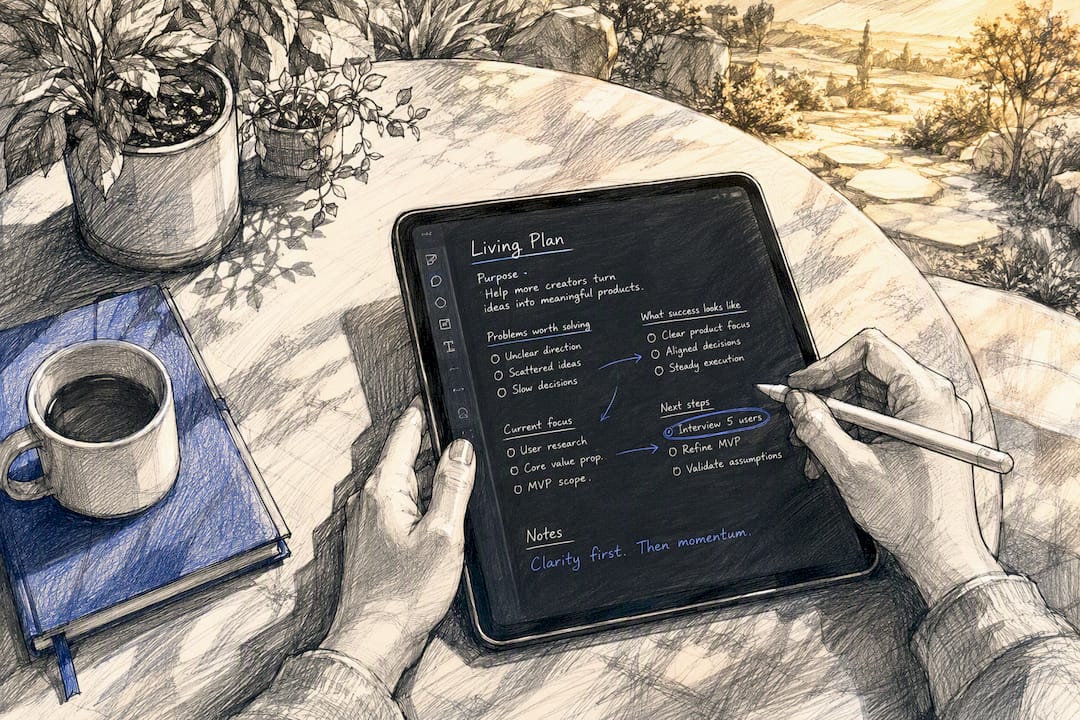
Walk engineering through the spec at handoff rather than dropping a link in a channel. Link the doc directly to its tickets and pull requests so anyone can trace a code change back to the requirement that justified it. When a requirement changes mid-build, update the status field and add a one-line changelog entry instead of silently editing history.
Archive it once the feature ships and stabilizes, but don't delete it. Six months later, when someone asks why the lockout window is 15 minutes and not 10, that spec is the only place the answer lives.
How Structured Inputs Turn Into Build-Ready Specs
Most of the friction in spec writing isn't the acceptance criteria, it's getting from a rough idea to organized context, functional requirements, and API needs without staring at a blank page. Klaritea's phase 0 model addresses that gap directly: a one-line idea gets structured into scope, market context, and feature requirements before any code gets written, then exported as a build spec.
Because the underlying model connects market research, feature mapping, and requirements in one structure, the context and goals section of a spec doesn't have to be reconstructed from scratch. It maps from work already done earlier in planning, syncing to GitHub or exporting to Notion and Confluence for teams that live there.
Pro Tip: Run a phase-0 tool before you write FRs by hand when you're validating a brand-new idea. It's far less useful once a feature is already mid-build and the scope is set.
Where Most Specs Actually Fall Apart
The specs that cause the most damage aren't the vague ones. Those get caught in review. The dangerous ones sound precise but quietly conflate "what" with "how," locking engineering into an implementation choice the requirement never actually needed. A requirement that says "cache the result in Redis" instead of "return results in under 200 milliseconds" ties your hands for no reason.
The second failure mode is a spec frozen the day it's approved. Requirements without a version history become useless the moment reality diverges from the plan, and reality always diverges. For a tight team, the workflow that actually holds up is short: validate the problem, write requirements as testable behavior, version everything, and revisit the doc at every milestone, not just at kickoff.
— Karl
Generate a Build-Ready Spec Before You Write a Line of Code
Writing a technical specification by hand works, but it means starting from a blank page every time and hoping you remembered every section. Klaritea skips that step: describe your idea in one line, and its AI advisory board, covering marketing, business strategy, and operations, stress-tests the idea and builds a connected model covering scope, features, and requirements before generating an exportable build spec.
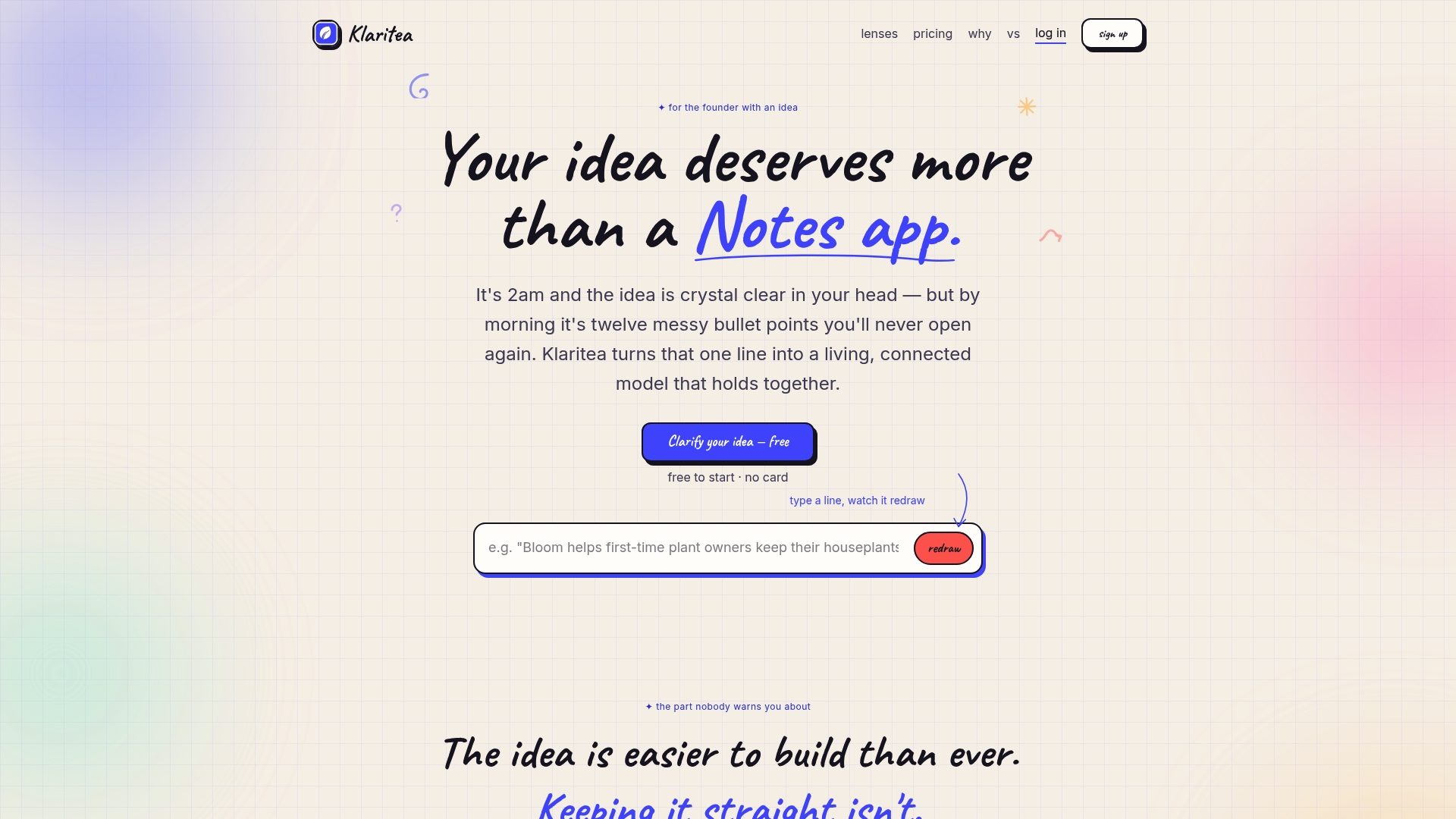
That connected structure is the real advantage over drafting a spec from scratch. Your context section, functional requirements, and feature priorities aren't separate documents you have to reconcile. They come from the same model, which means the spec you export already reflects your market research and scope decisions instead of contradicting them. Clarity scorecards flag gaps before they turn into rework, and GitHub sync means the spec doesn't just sit in a doc nobody reopens.
If you're validating a new idea before you commit engineering time to it, see how Klaritea's connected model works and generate your first build spec from a single-line idea.
Sources
- How to Write a Technical Specification With Examples
- Product specifications guide and examples
- Product specification guide and examples
FAQ
What Is a Technical Specification?
A technical specification is a detailed document that defines a feature's requirements, design, functionality, and acceptance criteria, giving engineering, QA, and product teams a single, testable reference for what to build.
Can You Give an Example of a Specification?
The login rate-limiting spec above shows a full example: front matter, functional requirements with IDs, three Given/When/Then acceptance criteria, and a simplified API contract you can adapt directly.
What Are Examples of Technical Writing?
Technical specifications, API documentation, user manuals, standard operating procedures, and system architecture diagrams are all common forms of technical writing, each built around precise, unambiguous language rather than persuasion.
What Is an Example of a Technical Description?
A technical description states observable, testable facts about a system, such as "the endpoint returns a 423 status code with a retry_after field when an account is locked," rather than a general statement like "the system handles lockouts securely."
How Is a Technical Spec Different From a Product Requirements Document?
A product requirements document explains the "what" and "why" for a broader audience, including business goals and user needs, while a technical specification focuses on the "how," with implementation-level detail engineering can build directly from.