Turning a raw idea into a build-ready MVP plan takes roughly 4 to 12 weeks, depending on how complex the idea is and how disciplined you are about validation. The process runs in four stages: discover, validate, scope, and spec. A fast track gets you a rough go/no-go signal in 30 days; a fuller phase-0 plan, complete with a developer-ready build spec, takes 6 to 12 weeks.
Here's the one-line version: 30-day fast validation → 2 to 8 additional weeks of scoping and spec work, depending on complexity.
The single most important thing to do before any of that starts is write down your kill criteria. Decide, on day one, what result would make you stop or pivot. Founders who skip this step tend to reinterpret bad news as "just needs another feature," and that's how a two-week validation sprint quietly becomes a six-month build with no customers.
Before you run a single interview, lock in:
- A founder constraints sheet: hours available per week, maximum cash you're willing to risk, and any legal or IP limits.
- One narrowly defined target segment, not three.
- Three success metrics you'll actually track, written down before you collect data.
Pro Tip: Track what people do, not what they say. A polite "I'd definitely use this" means nothing. A pre-order, a signed letter of intent, or a deposit means something.
Key Takeaways
A disciplined phase-0 process, timeboxed validation, predefined kill criteria, and developer-ready artifacts, turns a raw idea into a build-ready MVP plan in 4 to 12 weeks.
| Point | Details |
|---|---|
| Set kill criteria first | Write specific, measurable, timeboxed stop-or-pivot thresholds before collecting any data. |
| Pick your tempo | Run a 2 to 4 week fast sprint for a directional signal, or 6 to 12 weeks for a full build-ready plan. |
| Demand behavioral evidence | Track pre-sales, LOIs, and conversion rates, not compliments or stated intent. |
| Finish with real artifacts | End phase-0 with a mission sentence, backlog, wireframes, build spec, and pitch one-pager. |
| Use structured tools | Klaritea converts a one-line idea into a connected model with kill-criteria templates and an exportable build spec. |
Table of Contents
- How Long Does the Idea-to-MVP Timeline Actually Take?
- What Should Your Kill Criteria and Validation Scorecard Look Like?
- What Deliverables Should You Produce Before Hiring Developers?
- How Do You Run a Fast Validation Sprint?
- Why Structured Validation Beats Rushing to Build
- How Klaritea Turns Validation Into a Build-Ready Plan
- Sources
- FAQ
How Long Does the Idea-to-MVP Timeline Actually Take?
There are two honest ways to run phase-0, and which one you pick depends on how much you already know about your market.
The fast validation-first sprint takes 2 to 4 weeks and is built for founders who need a directional answer before committing more time. The comprehensive phase-0 track takes 6 to 12 weeks and ends with a full build-ready plan, not just a yes/no signal. Foundersbase's 30-day framework is a solid model for the fast track: days 1 to 10 for problem interviews, days 11 to 20 to build a one-page offer and drive 200 to 500 targeted visitors to it, and days 21 to 30 to actually ask for money.
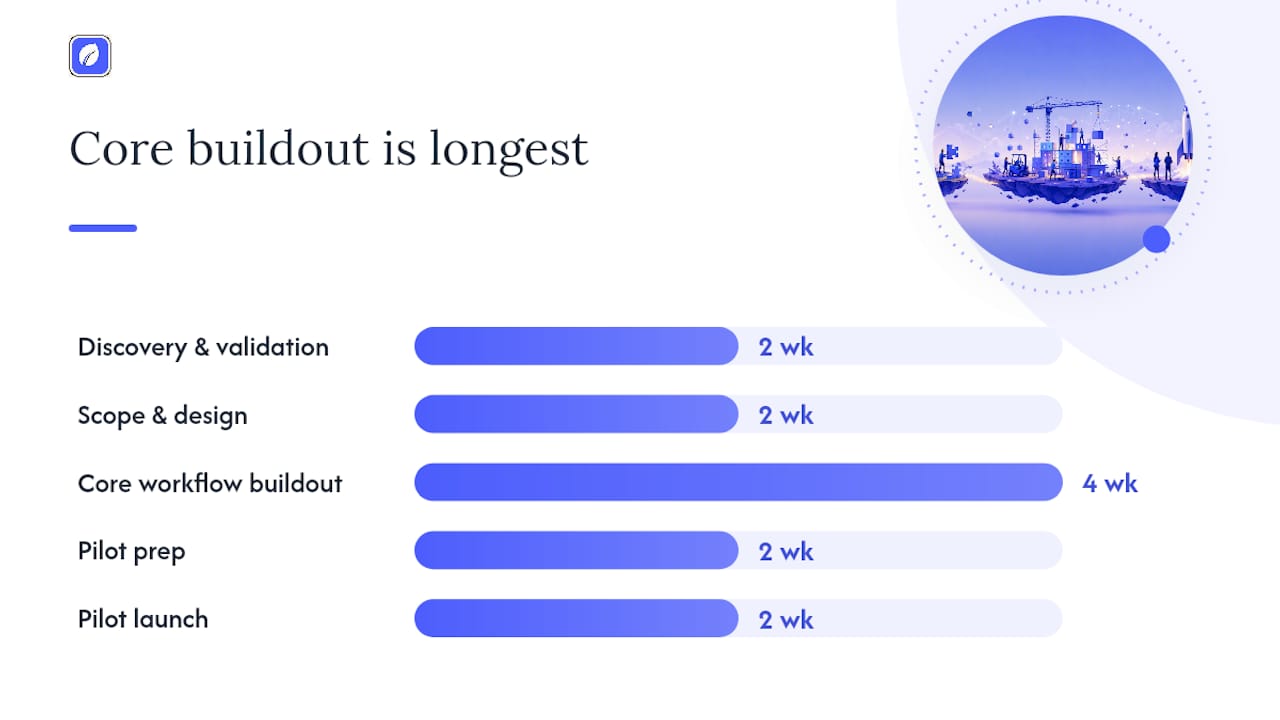
If you have more runway, a 12-week roadmap breaks phase-0 into five stretches: discovery and validation (weeks 1-2), scope and design (weeks 3-4), core workflow buildout (weeks 5-8), pilot prep (weeks 9-10), and pilot launch with iteration (weeks 11-12). Directional confidence usually shows up somewhere in the 2 to 6 week window for early signals, with stronger confidence by week 6 to 12.
| Weeks | Key Deliverable | Acceptance Criteria |
|---|---|---|
| 1-2 | Problem interviews, founder constraints sheet | 10+ interviews with a narrowly defined buyer; recurring, budgeted pain identified |
| 3-4 | Smoke test / landing page, MVP mission sentence | 200-500 targeted visitors driven; a one-sentence mission the whole team agrees on |
| 5-6 | Pre-sales ask, user flows, wireframes | 3-5 paid commitments or LOIs; core flow mapped end to end |
| 4 to 12 | Prioritized backlog, feature scoping | Backlog ranked by impact vs. effort; scope frozen |
| 10-12 | Build spec, pilot plan, pitch one-pager | Spec includes user stories, edge cases, and a minimal data model |
Scale the timeline to your idea's complexity, not to an arbitrary deadline. A B2C app with a single core action can compress the whole thing into 4 to 6 weeks. A B2B product with multi-stakeholder demos, procurement cycles, or network effects usually needs the full 10 to 12 weeks, because your validation evidence has to survive more than one buyer's opinion.
Whichever track you run, you should end phase-0 with something a developer or investor can actually use: a mission sentence, a prioritized backlog, wireframes, a build spec, and a pitch one-pager. Anything short of that isn't a plan, it's a hunch with slides.
What Should Your Kill Criteria and Validation Scorecard Look Like?
A kill criterion only works if it's specific, measurable, and timeboxed. "See if people like it" is not a kill criterion. "If fewer than 3 of 10 interviews reveal a recurring, budgeted pain point by day 10, stop and reframe the problem" is.
Build your validation scorecard around a handful of numeric thresholds, not vibes:
- Interview quality: at least 3 of 10 interviews surface a recurring pain point people already spend money or time trying to solve.
- Cold traffic conversion: 5% or better conversion on a landing page after at least two rounds of message iteration.
- Paid commitment: 3 or more pre-sales, deposits, or signed letters of intent before you write a line of production code.
| Signal | Weak Evidence | Strong Evidence |
|---|---|---|
| Interviews | Compliments, "sounds interesting" | Specific, budgeted pain named unprompted |
| Landing page | Visits with no action | Emails, waitlist signups, or purchases |
| Commercial intent | "I'd probably buy it" | Deposit, LOI, or pre-sale charge |
Keep a simple log of who signed off on each decision and what evidence triggered it. The ASU Entrepreneurship research on pivot decisions is blunt about the failure mode here: a pre-defined stop-or-pivot threshold is the single most important tool in phase-0, because without one, founders quietly move the goalposts.
Pro Tip: Write the threshold down before you collect any data, then don't touch it. If you catch yourself explaining away a bad number, that's the goalpost moving.
What Deliverables Should You Produce Before Hiring Developers?
Phase-0 should end with a stack of concrete artifacts, not a vague sense of confidence. Here's what each phase should hand off:
- Discovery: founder constraints sheet, 10-15 interview notes with scores against your thresholds.
- Validation: landing page copy, traffic and conversion numbers, pre-sale results.
- Scope: MVP mission sentence, user flows, low-fidelity wireframes.
- Spec: prioritized backlog with acceptance criteria, a full build spec, a pilot plan, and a one-page pitch.
A build spec worth handing to a developer needs, at minimum: user stories written from the buyer's actual language, explicit success criteria per story, known edge cases, a minimal data model, authentication requirements, and any third-party integrations. A sample user story might read: "As a freelance bookkeeper, I want to import a client's bank statement so I can categorize transactions without manual entry." The acceptance criterion attached to it: "System correctly parses CSV files from the three most common bank formats and flags any row it cannot categorize."
The gap between a founder's mental model of their product and a developer's first sprint is almost always a missing edge case or an undefined data field, not a missing feature. Specificity at handoff is what actually saves build time.
Before you hire anyone, run a handoff checklist: who owns the backlog, what assets exist (wireframes, copy, brand assets), and what minimum test data a developer needs to build against. Store these artifacts somewhere versioned, whether that's Notion, Confluence, or a GitHub repo, so nothing gets lost between phase-0 and sprint one.
How Do You Run a Fast Validation Sprint?
A 2 to 3 week sprint can produce real behavioral evidence if you run it tight:
- Days 1-5: Run 10-15 interviews with a narrowly defined buyer profile using their own words, not your assumptions.
- Days 6-12: Build a one-page offer using that language, then drive 200-500 targeted visitors to it.
- Days 13-18: Ask for money. Pre-sales, deposits, or signed LOIs count. Compliments don't.
You don't need a full team for this. You need a founder running outreach, someone building the landing page and copy, a paid-traffic or community-outreach lead driving visitors, and one technical reviewer sanity-checking that the offer's wording doesn't overpromise what's buildable. Simple tools work fine here: a no-code landing page builder, Calendly for interview bookings, and basic analytics to track conversion. Choose concierge, manual delivery over a prototype whenever the volume is low enough that a human can fake the product by hand. It's cheaper and faster than code every time.
Why Structured Validation Beats Rushing to Build
Founders who validate before building run more experiments per year and spend far less per failed idea. Landing-page validation typically costs €150 to €300 and takes 10 to 14 days, against 4 to 8 weeks and a much steeper price for a minimal MVP.

The instinct to start building immediately is really an instinct to avoid uncertainty, and it usually backfires. Once code exists, founders get emotionally attached to it, scope creeps to justify the sunk cost, and the product drifts from the original problem. Validate the pain first. Build second.
How Klaritea Turns Validation Into a Build-Ready Plan
Running phase-0 by hand across spreadsheets, interview notes, and a dozen open documents is exactly where founders lose weeks they don't have. Klaritea takes a one-line idea and builds a connected model around it: ICP, TAM/SAM/SOM sizing, competitor analysis, feature scoping, and requirements, all linked instead of scattered.
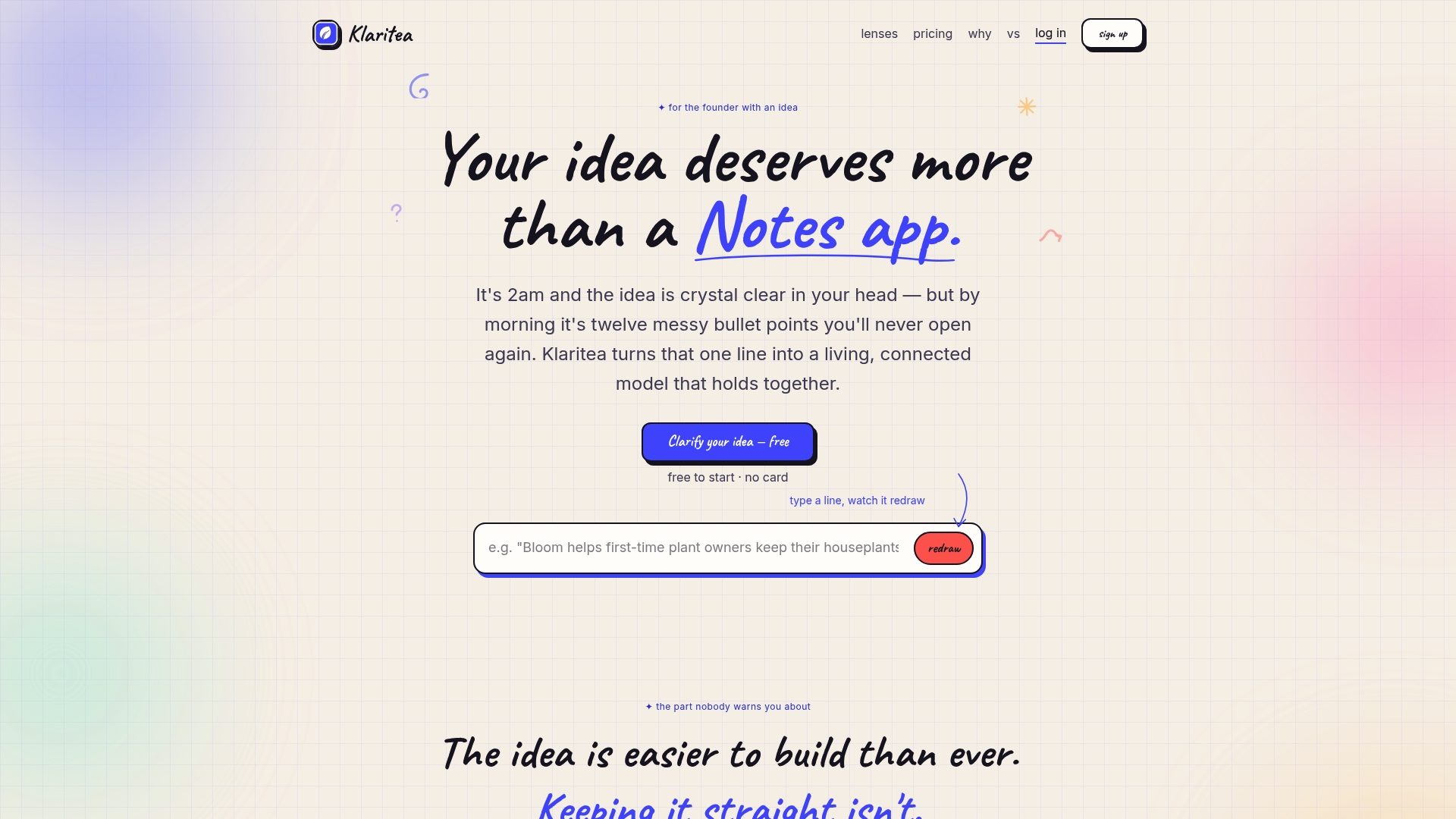
Where it earns its keep is the validation and handoff layer. Klaritea includes built-in kill-criteria templates so the threshold gets written down before you start, not rationalized away after a weak result. Its AI advisory board, three advisors covering marketing, business strategy, and operations, reviews your assumptions and fact-checks the plan before you commit real money to it. When phase-0 is done, you export a developer-ready build spec, a prioritized backlog, and a pitch one-pager in one pass, with sync to GitHub and export to Notion or Confluence for teams already living in those tools.
If you're staring at a one-line idea and a blank week ahead, start structuring it with Klaritea before you write a single line of code or a job posting for a developer.
Sources
For a deeper look at fast validation mechanics, read Foundersbase's 30-day validation framework, a quick, actionable read with day-by-day steps. For a fuller schedule, the 12-week MVP roadmap lays out phase-by-phase deliverables worth cloning into your own project tracker. LemonPage's cost comparison is useful for budgeting validation experiments against a build. Logicnord's timing breakdown and ASU's guide to pivot decisions both help set realistic expectations before you start the clock. Klaritea's own guide on how to validate a business idea before you build walks through the same phases with templates attached.
- Validate Your Startup Idea in 30 Days (Before You Build) | Foundersbase
- Idea to MVP Steps: A Founder's 2026 Roadmap | Jean-Baptiste Bolh
- Validate or Build an MVP First? Why Most Founders Get It Backwards | LemonPage AI
- When to pivot your startup and how to refocus your strategy | ASU Entrepreneurship
- How Long Does It Take to Validate a Startup Idea | Logicnord
FAQ
How long does it take to go from idea to MVP timeline planning completion?
Most founders need 4 to 12 weeks: 2 to 4 weeks for fast validation, or up to 12 weeks for a full phase-0 plan with a build-ready spec.
What are kill criteria in MVP planning?
Kill criteria are specific, measurable, timeboxed thresholds set before validation starts that tell you whether to keep going, pivot, or stop entirely.
How many customer interviews do I need before building?
Aim for 10 to 15 interviews with a narrowly defined buyer profile, with a scorecard threshold of at least 3 of 10 surfacing a recurring, budgeted pain point.
Can Klaritea help me build a validation scorecard?
Yes. Klaritea includes kill-criteria templates and an AI advisory board that reviews your validation evidence and assumptions before you commit to building.
What's the difference between validation-first and building an MVP first?
Validation-first uses cheap, fast experiments like landing pages and pre-sales to test demand before spending on engineering, while building first risks weeks of wasted development if nobody wants the product.