TL;DR:
- Starting a home-based marketing business involves establishing a legal foundation, including an LLC and liability insurance.
- A lean tool stack under $100 per month supports client outreach, branding, and project management efficiently.
- Focusing on a niche and delivering quick results helps build credibility and grow a sustainable client base.
A home-based marketing business is a client-facing service operation run entirely from a personal residence, covering services like SEO, social media management, email marketing, and paid advertising. Knowing how to start a marketing business from home is the first real decision you will make as an entrepreneur, and the good news is that the barrier to entry is lower than most people assume. A micro-agency can launch for under $500, including a domain, a website template, and basic free tools. The model works because marketing is a knowledge business. You sell expertise, not inventory.
What legal and financial groundwork is essential before launching?
The legal foundation of your home-based marketing business protects your personal assets and signals professionalism to clients from day one. Skipping this step is the fastest way to lose money you have not yet earned.

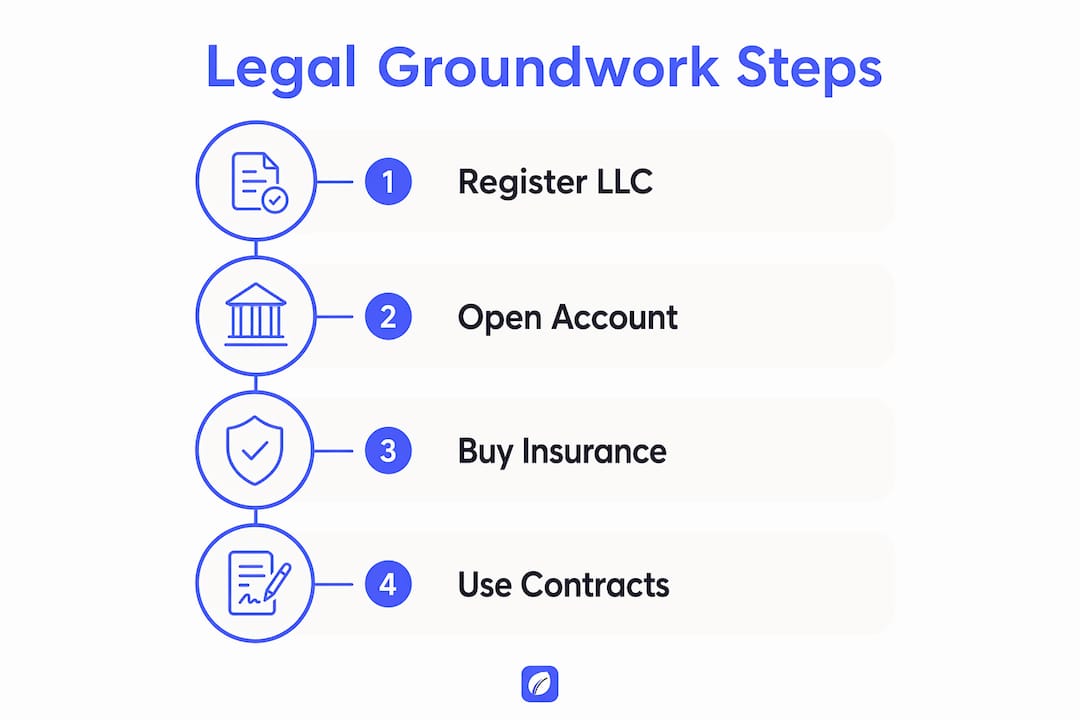
Register an LLC first. An LLC separates your personal finances from your business liabilities. If a client sues over a campaign result, your personal bank account stays out of reach. Formation costs vary by state but typically run $50–$200.
Open a dedicated business bank account immediately. Mixing personal and business funds creates tax headaches and makes your books unreadable. A separate account also makes it easier to track revenue and expenses from the start.
Buy business liability insurance. Business insurance runs $400–$800 annually for most home-based marketing operations. That cost is small compared to the legal exposure of operating without it.
Use written contracts for every client. A solid contract covers scope, timeline, payment terms, cancellation clauses, intellectual property ownership, and confidentiality. Contracts formalize client relationships and protect both parties when expectations shift. Without one, disputes become expensive and personal.
Getting these four elements in place before you sign your first client is not optional. It is the difference between running a real business and running a risky side project.
Which tools make a home-based marketing business viable without overspending?
Your technology stack determines your operating margin. The goal at launch is to stay professional without spending money you have not yet earned.
A lean stack covers four categories: website, CRM, email marketing, and project management. You do not need enterprise software to deliver results. You need tools that work reliably and cost less than your first client retainer.
| Tool Category | Purpose | Typical Monthly Cost |
|---|---|---|
| Website builder | Client-facing presence and credibility | $0–$20 |
| CRM | Contact tracking and pipeline management | $0–$30 |
| Email marketing | Outreach and nurture sequences | $0–$20 |
| Project management | Task tracking and client deliverables | $0–$15 |
| Design tool | Social graphics and pitch decks | $0–$20 |
The total for a functional stack sits well under $100 per month at launch. Lean subscription stacks costing roughly $60–$150 per month are the standard recommendation until revenue stabilizes. That ceiling matters because tool costs compound fast and eat margins before you have clients to cover them.
Tool sprawl is the most common early mistake. Founders sign up for ten platforms, spend hours on setup, and never actually do client work. Pick one tool per category, learn it well, and only upgrade when a specific client need demands it.
Pro Tip: Start with free tiers on every tool. Upgrade only when a paid feature directly solves a problem you are actively hitting. Most home-based agencies run profitably on free tiers for the first three to six months.
For founders who want a structured view of their full business model before picking tools, business plan software alternatives can help map the right stack to the right stage.
How do you build a service offering and brand with no portfolio?
Niche selection is the single most important positioning decision you will make. Niche-focused agencies charge higher rates and scale faster than generalists. A generalist competes on price. A specialist competes on expertise.
Choose either a vertical niche (a specific industry like real estate, e-commerce, or healthcare) or a functional niche (a specific service like LinkedIn ads or email automation). Both work. Trying to do both at once does not.
Once you have a niche, your messaging needs to answer three questions clearly:
- Who do you help?
- What specific result do you deliver?
- How do they reach you?
That is your entire brand at launch. You do not need a logo, a color palette, or a brand guide. You need a clear answer to those three questions on a page that loads fast.
A simple one-page website stating who you are, what you solve, and how to reach you lands first clients faster than a complex portfolio site. This is called avoiding "portfolio paralysis." Most new founders stall for months building a site no one visits instead of talking to potential clients.
Pro Tip: Offer a free audit of a prospect's existing marketing as your first engagement. An audit generates a real case study, demonstrates your expertise, and creates a natural path to a paid project. You build your portfolio by doing the work, not by waiting until you have one.
What client acquisition strategies work for home-based marketing startups?
Client acquisition is where most home-based marketing businesses either gain traction or stall. The tactics that work are not complicated. They require consistency.
-
Start with warm outreach. Your existing network is your fastest path to revenue. Message former colleagues, classmates, and local business owners. Be specific about what you offer and who you help. Generic "I started a business" announcements produce nothing.
-
Use LinkedIn for personalized prospecting. LinkedIn is the highest-signal platform for B2B marketing services. Comment on posts from your target clients, send connection requests with a short personal note, and follow up with a specific observation about their business. Volume matters less than relevance.
-
Expect a 2% conversion rate on cold outreach. Sending 50 cold emails typically produces one client within a month. That means three conversations and one signed contract. The math is predictable. The only variable is whether you send the emails.
-
Build referral partnerships. Web designers, accountants, and business coaches serve the same clients you do. A referral agreement with two or three of these professionals can generate a steady stream of warm introductions without any cold outreach.
-
Use email marketing as a long-term asset. Email delivers $36 in return for every $1 invested, making it the highest-ROI channel available to a home-based business. A simple monthly newsletter to your contact list keeps you visible and generates inbound inquiries over time.
-
Speak where your clients gather. Local business groups, industry podcasts, and online communities give you credibility and reach without an advertising budget. One well-placed guest post or panel appearance can generate more leads than weeks of cold outreach.
How do you maintain momentum and scale sustainably?
Scaling a home-based marketing business from one client to ten requires systems, not just effort. The founders who stall at two or three clients are usually doing everything manually and running out of hours.
The primary failure cause for solo operators is not lack of knowledge. It is lack of consistency in daily marketing effort. Blocking one hour every morning for prospecting and content creation outperforms sporadic large pushes. That one hour compounds over weeks into a full pipeline.
Automation handles the tasks that do not require your judgment:
- Automated reporting tools pull campaign data and generate client reports without manual work.
- Email sequences nurture prospects between touchpoints.
- Scheduling tools batch your social content in one session per week.
Automating reporting and prospecting saves up to 70% of operational time. That time goes back into client relationships and new business development. As your client base grows, hire contractors for execution tasks like copywriting, design, or ad management. Keep strategy and client communication in-house. That is where your value lives.
Key Takeaways
Starting a home-based marketing business requires a legal foundation, a lean tool stack, a clear niche, and consistent daily outreach to build a client base that generates recurring revenue.
| Point | Details |
|---|---|
| Legal setup is non-negotiable | Register an LLC, open a business bank account, and buy liability insurance before signing any client. |
| Keep your tool stack under $100/month | Use free tiers and upgrade only when a specific paid feature solves an active problem. |
| Niche selection drives pricing power | Vertical or functional specialization lets you charge higher rates and win clients faster than generalists. |
| One-page website beats portfolio paralysis | A clear, simple site focused on who you help and what you deliver lands clients faster than a complex portfolio. |
| Daily consistency beats sporadic effort | Blocking one hour each morning for outreach and content creation produces a full pipeline over time. |
What I have learned from launching a home-based marketing business
The advice I wish someone had given me early is this: your tools and your website do not matter as much as your first three client results. I spent weeks picking the right CRM and designing a logo before I had spoken to a single prospect. That was wasted time.
The founders who gain traction fast are the ones who pick a niche, write a clear one-liner about what they do, and then spend every available hour talking to potential clients. They do not wait for a perfect brand. They get a result for one client, document it, and use that as their entire pitch for the next one.
The other thing I have seen kill early momentum is spreading across too many marketing channels at once. Pick one. LinkedIn works well for B2B services. Email works well for nurture. Master one channel before adding a second. Trying to be everywhere produces mediocre results everywhere.
Mindset matters more than most people admit. The first 90 days will feel slow. Outreach will feel awkward. Clients will take longer to close than you expect. The founders who push through that period and stay consistent are the ones who build real businesses. The ones who pivot to a new strategy every two weeks never do.
— Karl
Klaritea helps you plan before you build
Launching a marketing business means making dozens of connected decisions at once: who you serve, what you offer, how you price it, and what you build first. Getting those decisions wrong early costs time and money that most founders cannot afford to lose.

Klaritea is an AI-powered planning tool that turns a one-line business idea into a structured model covering your ideal client profile, market size, competitor landscape, features, and build requirements. Its AI advisory board, including Maya on marketing and Devon on business strategy, challenges your assumptions before you invest. For founders mapping out a home-based marketing agency, Klaritea replaces weeks of scattered planning with a connected model you can act on immediately. See how it works and turn your fuzzy idea into a shipped product.
FAQ
How much does it cost to start a marketing business from home?
Launching a micro-agency can cost under $500 for a domain, website template, and basic tools. Ongoing monthly tool costs stay under $100 during the early stage.
Do I need an LLC to start a home-based marketing business?
An LLC is not legally required in most states, but it protects your personal assets from business liability and simplifies taxes. Most home-based marketing founders form one before signing their first client.
How long does it take to get the first client?
Cold outreach to 50 contacts typically produces one client within about a month. Warm outreach through your existing network moves faster, often within the first two weeks.
What services should a home-based marketing business offer first?
Start with one or two services you can deliver confidently, such as email marketing, social media management, or SEO audits. Specializing in a single niche accelerates authority and makes client acquisition easier.
Is a portfolio required to land the first client?
A portfolio is not required. Offering a free audit or a small paid pilot project generates real results you can document and use as your first case study.