
Coordinating strategy across teams and keeping planning, project tracking, and business model elements connected is still too fragmented. Many mainstream tools block full access to audit logs, charge extra for core integrations, or limit stakeholder invitations which stalls alignment. This comparison reviews alternatives with live model connection, AI audit trails, and team flexibility so leadership groups can pair features to real planning needs.
Table of Contents
Klaritea
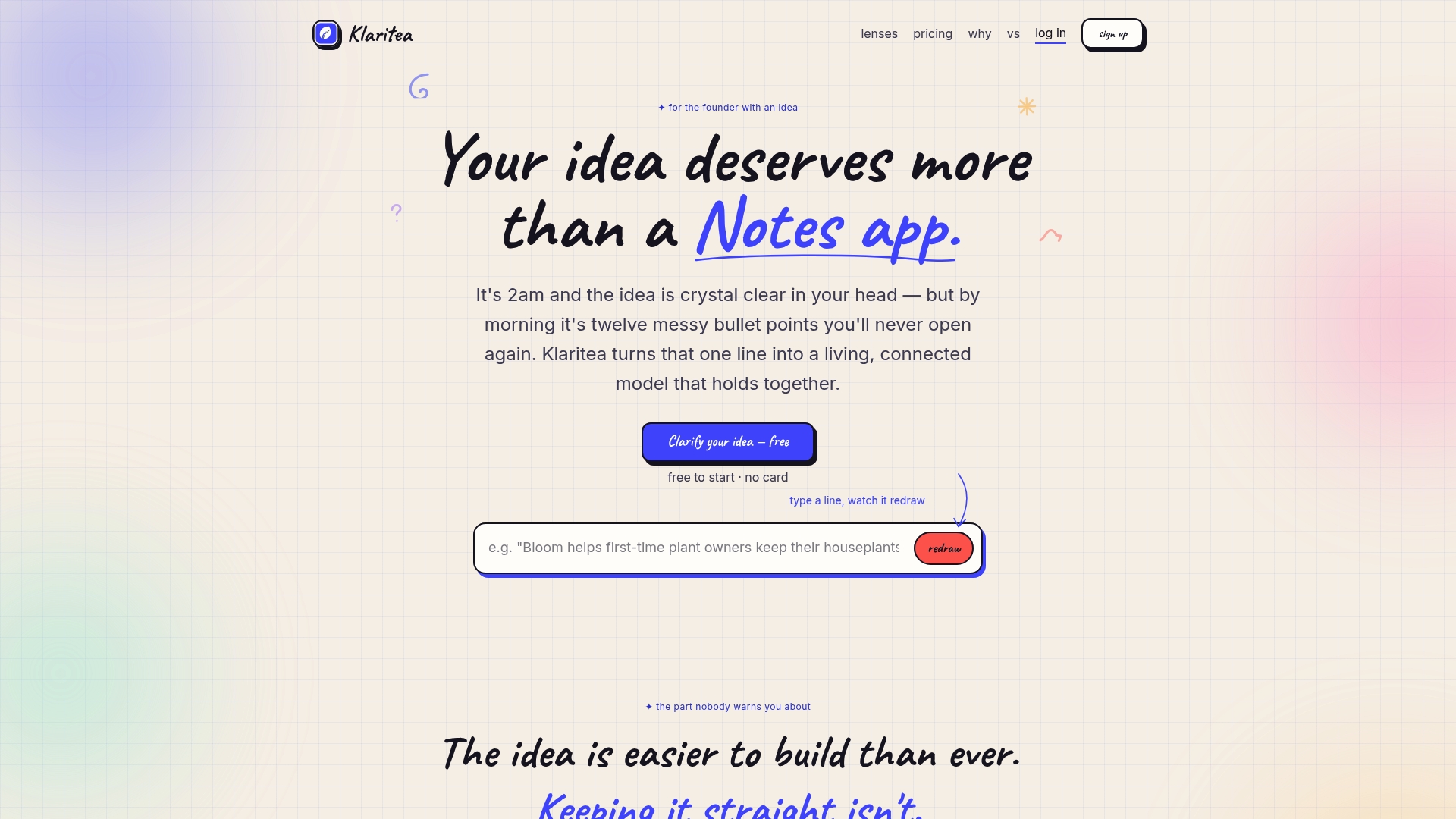
At a Glance
Syncs with GitHub for real-time commit mapping. That connection ties code changes back to specific model items and market assumptions. The platform also records AI actions with rationale so every suggestion remains visible and reviewable.
Core Features
Klaritea builds a single, connected business model that spans vision through scale and keeps all elements linked. The system logs AI actions and rationale so teams can trace why a recommendation appeared and who made or approved it. Multiple lenses for clarify, plan, build, run, scale, understand, pitch, and scorecards help you view the same idea from distinct angles, and the Pro plan adds autonomous AI cycles and agent management.
Key Differentiator
Klaritea centers every idea inside a traceable, unified model. That means customer segments, features, research, and development work all live in one place and remain connected to the AI steps that produced them. Teams work from a single source of truth instead of from scattered notes and separate tools.
Pros
Klaritea provides a live model of the business that updates as you test assumptions and add research. The platform makes AI work auditable by showing rationale and linking actions to customer segments, which reduces confusion about why a change occurred. GitHub integration maps commits back to model items so engineers and founders stay aligned. Plans scale from a free tier to a Pro level that unlocks autonomous AI for repeatable cycles.
Cons
- Advanced features require a paid plan, which limits access to autonomous AI and agent management for some small teams.
Notable Integrations
- GitHub: maps commits to model elements for traceability and helps keep development work aligned with validated assumptions.
Who It’s For
First-time startup founders, solo entrepreneurs, and small teams that need a disciplined way to validate ideas, run experiments, and coordinate early development work. It suits teams that want AI outputs they can inspect, adjust, and link to code or project tasks.
Unique Value Proposition
The Pro plan includes autonomous AI operating cycles and agent management, which lets you run repeatable validation and operational steps without manual orchestration. That capability turns recurring research and deployment tasks into scheduled cycles tied to the same model, saving time usually spent recreating context across documents and tools.
Real World Use Case
An entrepreneur clarifies a mobile app idea in Klaritea, runs market assumption tests, and records results inside the model. The team links a validated feature to a GitHub commit so engineers build the exact behavior the model expects. The recorded AI rationale keeps investor conversations focused on decisions and evidence.
Pricing
Free tier for basic use. The Pro plan costs $99/month and unlocks autonomous AI and agent management. Additional tiers are available for larger teams and usage levels.
Website: https://klaritea.app
ClearPoint Strategy
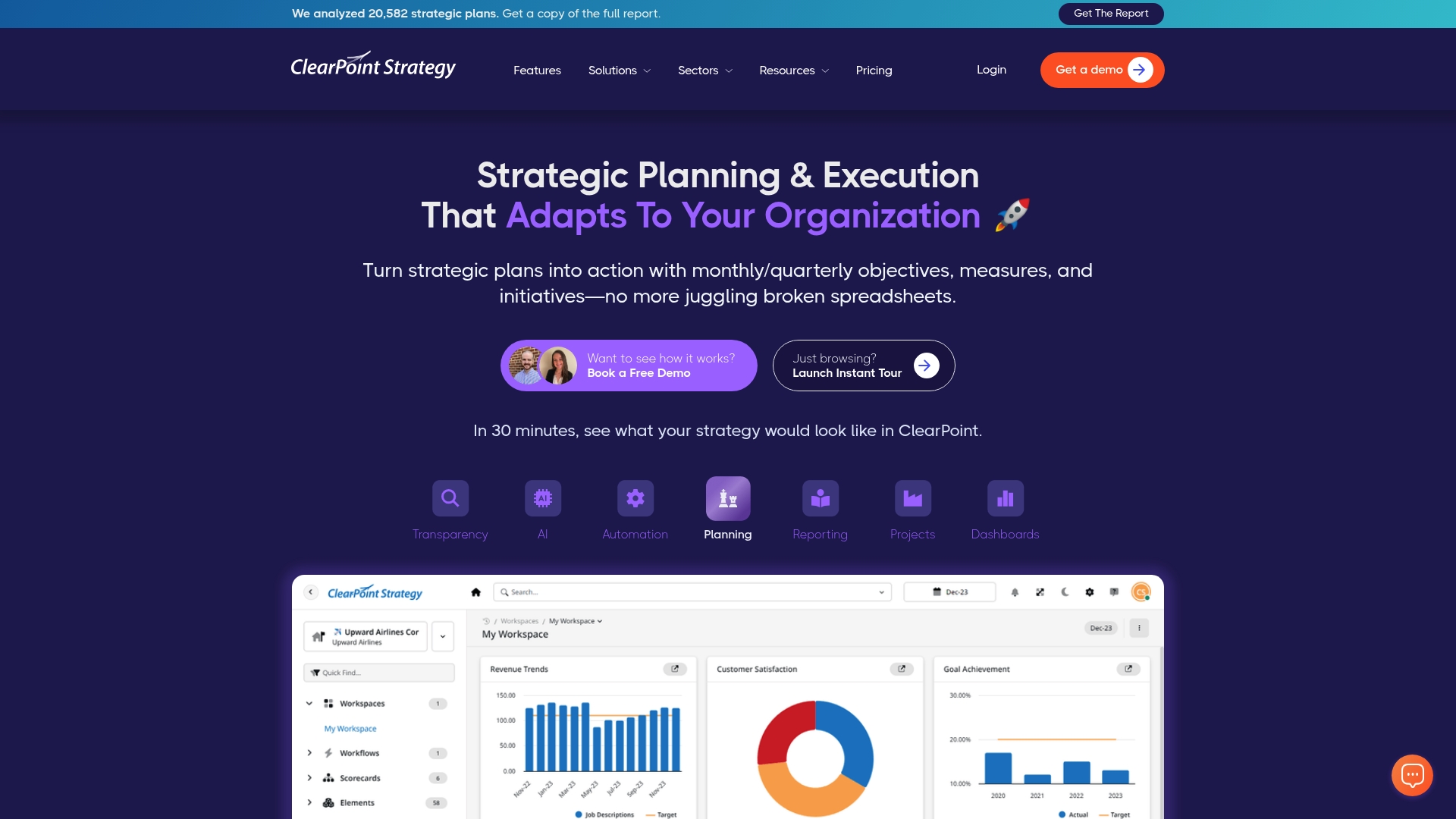
At a Glance
ClearPoint’s marketing materials state support for enterprise security standards such as SOC-2 and SSO, and it targets organizations with 25+ employees. The platform bundles AI driven recommendations with automated data migration to move teams off spreadsheets faster. That mix aims to reduce manual reporting and improve alignment across departments.
Core Features
ClearPoint combines strategic planning and performance management with AI powered recommendations that suggest priorities and signal risks. It offers automated reporting and dashboards, plus project and initiative tracking that links tasks to KPIs. The platform includes customizable scorecards and real time data synchronization that connects to existing data sources.
Key Differentiator
The standout feature is the pairing of AI driven strategy recommendations with automated data migration. That pairing helps large teams convert legacy spreadsheet programs and disparate data stores into a single planning workflow. It fits enterprise and government use cases more than founder stage planning tools like Klaritea.
Pros
ClearPoint reduces manual reporting work by automating recurring dashboards and exports, freeing analysts to focus on interpretation. The integration options keep data consistent across systems, which lowers reconciliation work and reporting errors. The platform also offers enterprise security features such as SSO and role based access, and it supports guided migration from spreadsheets.
Cons
-
Pricing is customized and can be hard to estimate before discussions with sales.
-
The feature set is large and may overwhelm small teams with simpler needs.
-
Initial setup and training often require dedicated support and time investment.
When It May Not Fit
Small teams under 25 employees or groups seeking a minimal planning tool will likely find ClearPoint more than they need. Organizations with tight fixed budgets may struggle with custom pricing bands. Groups that need a plug and play solution with little setup time should consider lighter tools instead.
Notable Integrations
-
Power BI
-
Snowflake
-
SQL Server
-
Jira
-
Tableau
-
QuickBooks
-
Google Analytics
Who It’s For
Large organizations, government agencies, and mid market to enterprise teams that need structured strategy execution and regular leadership reporting. Teams that maintain multiple data sources and need consolidated scorecards will get the most value. Groups requiring enterprise security controls will find the platform aligned with those demands.
Real World Use Case
A regional government agency uses ClearPoint to align several departments on shared goals. The team tracks KPIs in real time and generates automated reports for executives and stakeholders. That reduced manual updates and improved the cadence of leadership reviews.
Pricing
Pricing is custom tailored based on number of users, support level, integrations, and required features. Expect a sales conversation to produce a formal quote rather than a published starter tier. The vendor customizes licensing to the organization size and implementation scope.
Website: https://clearpointstrategy.com
i-nexus
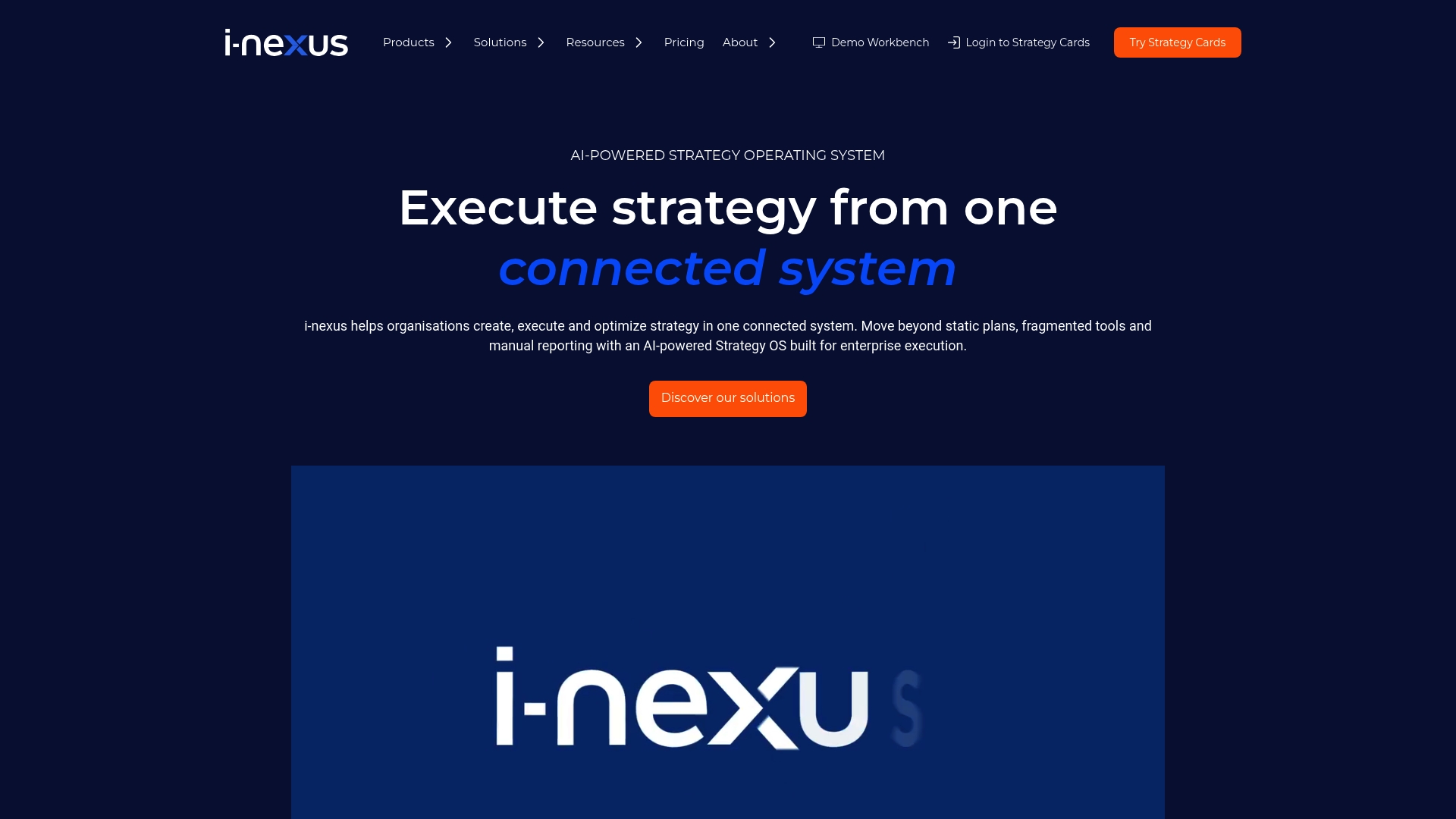
At a Glance
Starting at $0 for individuals and small teams, i-nexus also lists a standard team price of $28 per user/month. The platform combines goal cascade, portfolio oversight, and KPI tracking in one connected system. Its toolset targets enterprise initiatives such as operational excellence, M&A, ESG, and large transformation programs. The cost entry and the enterprise focus make it a rare option that spans small team pilots to full scale deployments.
Core Features
i-nexus connects goals, projects, and metrics in an AI powered strategy operating system that keeps work and strategy linked. It supports recurring strategic reviews, action tracking, escalations, and performance checks while providing real time project tracking and clear ownership. The platform includes Strategy Cards for structured analysis with frameworks like SWOT, PESTLE, and Porter’s Five Forces.
Key Differentiator
The one distinct capability is the platform’s AI powered connected system that spans strategy creation, execution, and performance tracking. That design keeps strategic intent linked to delivery through governed systems such as Workbench. The architecture favors organizations that must trace outcomes back to decisions and investments across portfolios.
Pros
i-nexus delivers a single system for linking strategy and delivery, which reduces reliance on spreadsheets and disconnected reports. It supports enterprise scale work across multiple programs and departments, and the platform includes templates and resources that speed adoption. Global case studies and customer references suggest it meets complex governance and reporting needs for large organizations.
Cons
-
Third party reviews highlight a complex user interface and integration challenges that require time to overcome.
-
Some customers report difficulty customizing the system for very large organizations, which can lengthen deployment timelines.
-
The breadth of features may overwhelm smaller teams or groups without mature strategy processes.
When It May Not Fit
If your team is small or your strategic process is informal, the platform can feel heavyweight. Organizations without dedicated resources for configuration or change management will face longer ramp up. If you need a lightweight planning board or simple OKR tracker, this product is likely a poor fit.
Who It’s For
Large organizations and matrixed enterprises managing complex strategies across multiple departments and geographies. Teams that need formal governance, traceability, and portfolio level reporting will benefit most. It suits transformation offices, corporate strategy groups, and continuous improvement functions with dedicated program resources.
Real World Use Case
A manufacturing company replaced spreadsheets with i-nexus to digitalize its Hoshin Kanri and improvement processes. The company gained clearer goal cascade, better project traceability, and visible performance metrics across sites. That change reduced manual status collection and made ownership for each improvement more visible.
Pricing
Pricing starts at $0 for individuals and small teams. Standard teams are listed at $28 per user/month. Enterprise options are noted as coming soon and likely require a custom quote.
Website: https://i-nexus.com
StratPlan
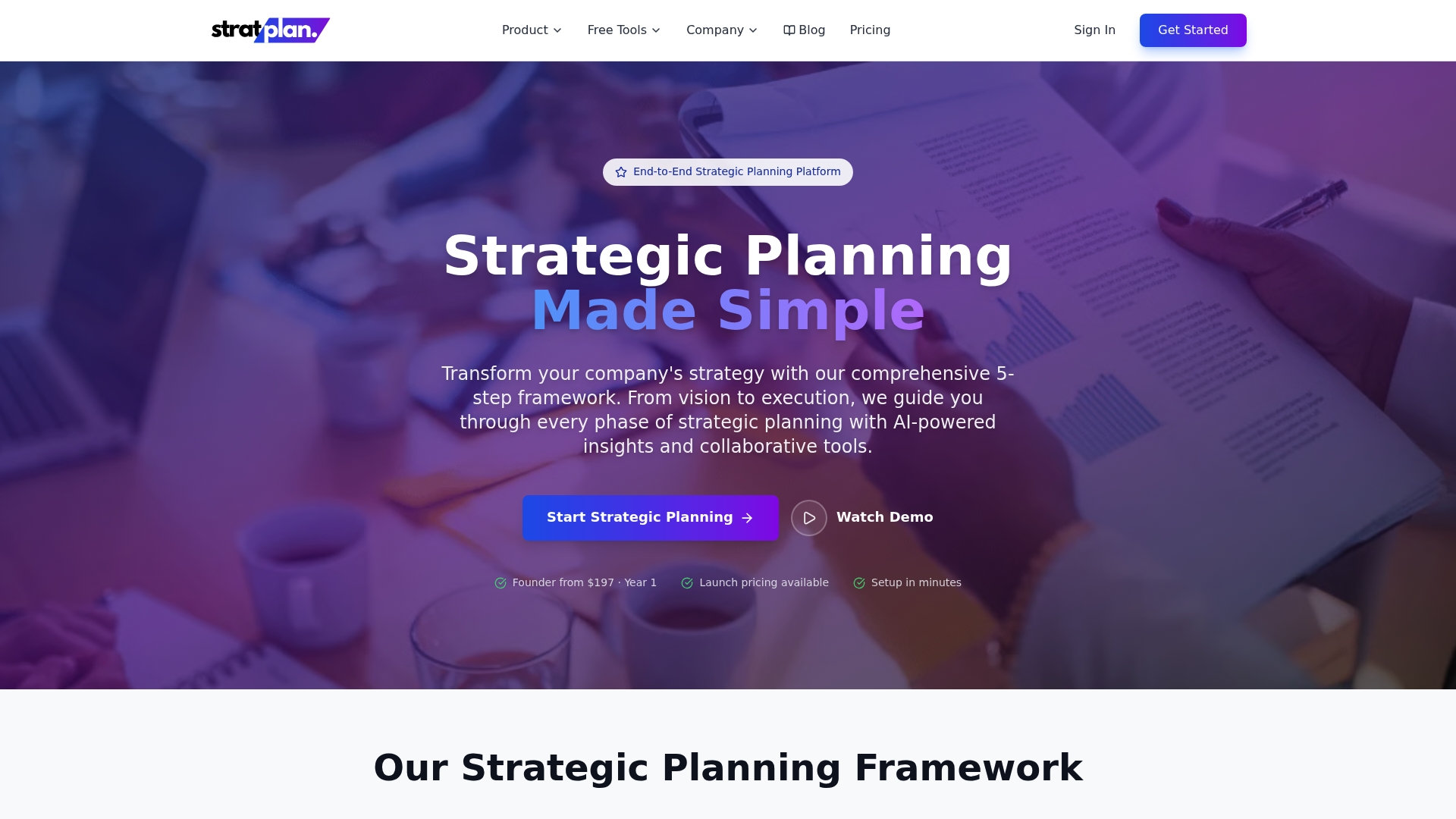
At a Glance
A five step methodology moves teams from vision to monitoring with built in diagnostics and execution tools. The platform pairs that framework with AI powered strategy suggestions and real time KPI dashboards. That mix aims to keep strategy work visible from leadership goals down to daily tasks.
Core Features
StratPlan delivers a five step strategic planning framework that covers foundation, assessments, strategy formulation, execution, and monitoring, and it ties those phases to project management tools. The product includes AI powered insights, organizational structure modeling with hierarchy visualization, and real time KPI dashboards for performance tracking. Collaboration tools let leadership and teams work inside the same plan while the platform maps strategy to deliverables.
Key Differentiator
The standout element is the combination of a structured five step methodology and embedded AI suggestions. That pairing means teams get framework-driven prompts alongside diagnostics rather than only blank templates. For organizations that want a single place to move from diagnostic to tracked work, this integrated approach defines StratPlan.
Pros
StratPlan gives a clear, repeatable path for strategy development and execution, which reduces uncertainty when teams must convert vision into projects. The platform’s organizational modeling and hierarchy visualization help leadership align roles to strategic priorities, making accountability easier to assign. The presence of real time KPI dashboards and project management features means teams can measure progress without exporting data to separate tools.
Cons
-
May overwhelm small teams or groups unfamiliar with formal strategic planning frameworks.
-
Pricing may be a concern for smaller organizations or startups with limited budgets.
-
Lacks publicly listed integrations, which could force manual data moves for some workflows.
Who It’s For
Mid sized and large organizations, strategy teams, and leadership groups that want a guided, end to end planning process will get the most value. Teams that already use formal planning frameworks and want to add AI driven diagnostics will find the platform’s structure helpful. Organizations that need a light tool for ad hoc planning will likely find it heavier than necessary.
Real World Use Case
A leadership team uses the five step process to run an annual strategy cycle. They collect assessments, let the AI suggest priorities, model the organization for accountability, and push strategic initiatives into project boards. That setup keeps KPIs visible and links tactical work back to the original vision.
Pricing
StratPlan lists launch pricing available but does not publish full tier details publicly. Expect a tiered model given its enterprise oriented feature set and the platform’s focus on larger teams.
Website: https://stratplan.co
twom

At a Glance
twom’s marketing materials state it bundles 13 interconnected planning and analysis tools. That modular grid turns strategy work into linked steps from analysis to execution. The platform emphasizes a visual, structured approach so teams can trace decisions back to evidence.
Core Features
twom combines AI powered strategic analysis with visual frameworks and collaboration features for real time editing and commentary. The product includes a set of planning and analysis tools that cover market and competitor review, business model work, and portfolio assessment. Data integration feeds past projects and market signals into the workflow so ideas remain tied to evidence.
Key Differentiator
According to the company, the AI continuously evolves based on real world use and adapts its analysis and decision proposals over time. That adaptive training is exposed inside the tool so suggested actions reflect the current playbook. The platform also allows unlimited team member invitations at no extra cost which supports broad stakeholder involvement.
Pros
twom’s adaptive AI can reduce the time teams spend on manual synthesis by surfacing candidate decisions and next steps. The product includes training resources, a community layer, and validation tools that help inexperienced planners learn the method while applying it to live work. Security is listed as enterprise grade with encryption and standard safeguards, and the unlimited team invitations remove per seat friction for cross functional groups.
Cons
-
Limited public detail on specific third party integrations or compatibility with existing stacks.
-
Pricing involves multiple tiers and enterprise options, which may require vendor calls to clarify total cost.
-
Public materials do not describe tailored implementation or customization services in depth.
When It May Not Fit
Organizations that must plug strategy tools directly into an established tech stack may find the public integration details insufficient. Buyers that expect an out of the box, heavily customized rollout without vendor engagement will likely need to budget for additional implementation time. Large enterprises with strict procurement rules should request explicit integration and customization documentation.
Who It’s For
Teams at startups, mid market companies, and universities that want a visual, team oriented method for strategy work will benefit most. twom fits groups ready to adopt a structured process and to involve multiple stakeholders across departments. The unlimited invitations policy suits programs that require broad review and buy in.
Real World Use Case
A medium sized company uses twom to map competitive positions, set OKRs, and assign initiatives across product and sales. The visual boards let department leads see dependencies and handoffs. That clarity shortened meeting cycles and made ownership of objectives explicit.
Pricing
twom offers a free plan with limited features, Pro from 16.67€/month, Business from 54.17€/month, and Enterprise pricing on request. The tiering means you may need to compare feature availability across plans before committing.
Website: https://thetwom.com
Comparison of alternatives
Klaritea offers a unique approach to strategic planning, integrating code-level development traces with AI-driven validation and task accountability. However, depending on specific operational structures, other options may provide enhanced functionality in distinct areas.
Integration and functionality comparison
Klaritea’s capability to synchronize code engineering (via GitHub) with a central strategic model differentiates it from alternatives like ClearPoint Strategy, which focuses on KPI integration and department alignment, and i-nexus, known for structured portfolio-level reporting. For cross-functional teams aiming to tie operational actions directly to strategic objectives, Klaritea remains.
Onboarding and user facilitation
While Klaritea emphasizes a traceable model ecosystem, StratPlan distinguishes itself through its guided five-step process to align vision with execution. Teams seeking predefined workflows and a diagnostic-driven approach may prefer StratPlan for its practical frameworks, while large departments might leverage twom’s modular approach for visual and collaborative strategy tracking.
Best fit
-
Klaritea is best for small teams or startups aiming for a unified, proactive strategy tool with transparent AI contributions.
-
StratPlan suits organizations leaning towards a procedural framework to transition vision into strategies effectively.
-
ClearPoint Strategy is ideal for enterprises valuing interconnected systems for departmental reporting and alignment.
Our pick
Given the flexibility and authenticity provided by Klaritea’s unified model, we recommend it for its strategic depth and operational visibility. However, teams emphasizing predefined paths or departmental coordination may find StratPlan or ClearPoint Strategy a fitting alternative.
The following table compares top strategic planning software based on critical aspects to assist in selecting the best tool for specific needs.
| Product | Key Differentiator | Best For | Pricing | Notable Limitation |
|---|---|---|---|---|
| Klaritea | Unified model linking vision, actions, and rationale | Startups and small teams | Free, Pro at $99/month | Advanced features require a Pro plan |
| ClearPoint Strategy | AI driven recommendations with enterprise security and automated data migration | Large organizations and agencies | Price not published | Custom pricing requires discussions |
| i-nexus | AI powered system spanning strategy creation to execution | Enterprises managing complex portfolios | Free, Teams at $28/user/month | Complex interface and integration challenges |
| StratPlan | Five step methodology integrating strategy, diagnostics, and dashboards | Mid-sized and large organizations | Price not published | Lacks publicly listed integration details |
| twom | Adaptive AI and unlimited team member inclusions for collaborative engagement | Startups and small organizations | Free, Pro at 16.67€/month | Limited public details on third party integration |
How Can Startup Founders Avoid Costly Early Mistakes in Strategic Planning?
Many first-time founders and small teams struggle to connect their initial ideas with real market data before investing time and money in development. Klaritea addresses this challenge by turning your one-line idea into a detailed, connected business model. It links your ideal customer profile, market size, competitor analysis, feature list, and build specs—all in one place. This clarity helps reduce the risk of building products that never find a market return.
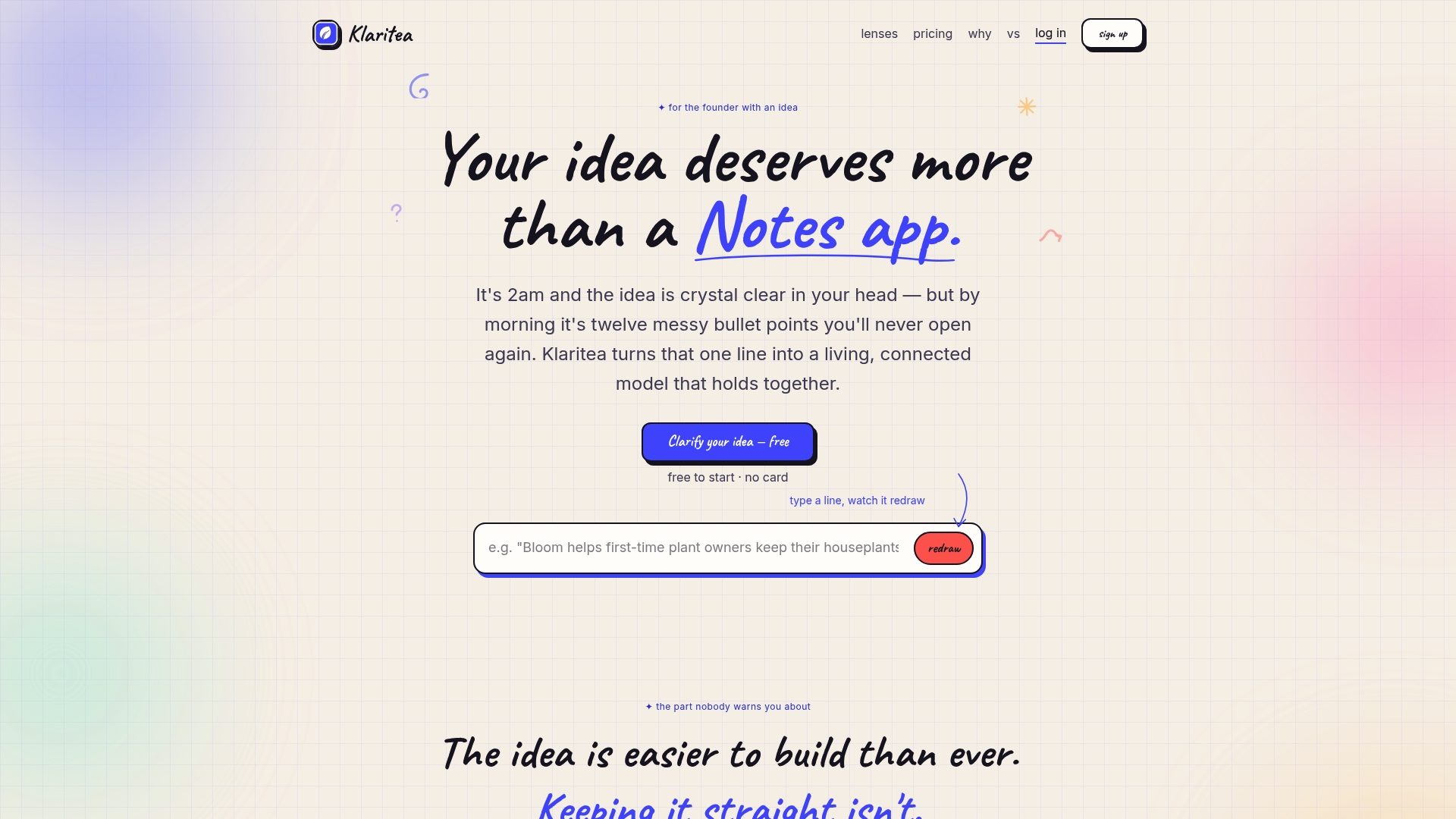
Klaritea’s AI advisory board reviews your idea from marketing, business, and operational angles so you can see why each recommendation appears. Sync with GitHub to keep development aligned with validated models. Visit Klaritea to translate your vision into a clear plan and avoid spending $15,000 on uncertain app builds. Start by typing your idea and get a connected, transparent model of your business today.
FAQ
What is a key feature of Klaritea for strategic planning?
Klaritea offers a live model of the business that updates as you test assumptions and add research. This feature helps teams trace why changes occurred, linking AI actions to customer segments. Teams using Klaritea can ensure their strategic planning remains aligned and data-driven.
How does Klaritea compare to ClearPoint in terms of target audience?
ClearPoint is particularly designed for large organizations, government agencies, and teams requiring structured strategy execution. Klaritea, in contrast, is well-suited for first-time startup founders and small teams needing a disciplined way to validate ideas. This distinction makes Klaritea a better fit for entrepreneurs and small teams looking to manage early development work.
Which platform provides automated reporting for strategic planning?
ClearPoint combines strategic planning with automated reporting, which helps teams streamline their performance management. In contrast, Klaritea focuses on linking code and model items, providing a different emphasis on tracking and collaboration. Teams in need of automated reporting should consider ClearPoint, while those focusing on integrating software development might prefer Klaritea.
Can small teams use Klaritea effectively for their strategic planning needs?
Yes, Klaritea is designed with small teams in mind, providing access to a foundational model without overwhelming users with features. The Pro plan supports autonomous AI and agent management, allowing small teams to validate and execute ideas efficiently.
What differentiates i-nexus from Klaritea in terms of pricing structure?
While i-nexus offers starting pricing of $0 for individuals and small teams and lists a standard price of $28 per user/month, Klaritea has a free tier for basic use and a Pro plan priced at $99/month. This difference allows smaller teams to explore i-nexus with minimal initial commitment, whereas Klaritea is an excellent choice for those who need advanced features available in the Pro version.